The DHC Harp
The Story
Many many years ago I invented a new kind of harp — meaning, I visualized it and fell in love with the idea, started drawing designs of it, describing it to harp builders and begging them to make me a prototype.
It was a new kind of instrument – a harp the size and power of an electric guitar – like the love-child of a concert harp and an Stratocaster.
It’s the harp I play today. The one that’s named after me, the “DHC.”
Long story short …
I cobbled together a prototype and took it to the world’s most visionary harp builder – Joel Garnier, the head of CAMAC Harps in France. He made a ‘real’ prototype from mine, and it became my signature instrument.
When he died, his protégé, Jakez Francois, continued development and it’s now become the standard of electric harps and if you want one you can get on a waiting list – they’re in high demand.
But the road wasn’t totally smooth.
CAMAC’s first prototype was great, but was made of wood. It was heavy – and each progressive model got heavier as the hardware was improved. Eventually it became so heavy it was unplayable.
In 2010 I convinced CAMAC to collaborate with bicycle manufacturers in France to create a new super model of the instrument that would bringing racing bike technology to harp manufacturing. I wanted a model light enough to easily wear, powerful enough to solo with symphony orchestras and tour with a rock band. Because I do both those things.
And that’s exactly what happened. CAMAC did go to the bike builders. They used bike body-design to create a new carbon-fibre model harp, which has now become the standard for wearable electric harps and that’s the model that carries my name – the “DHC” model.
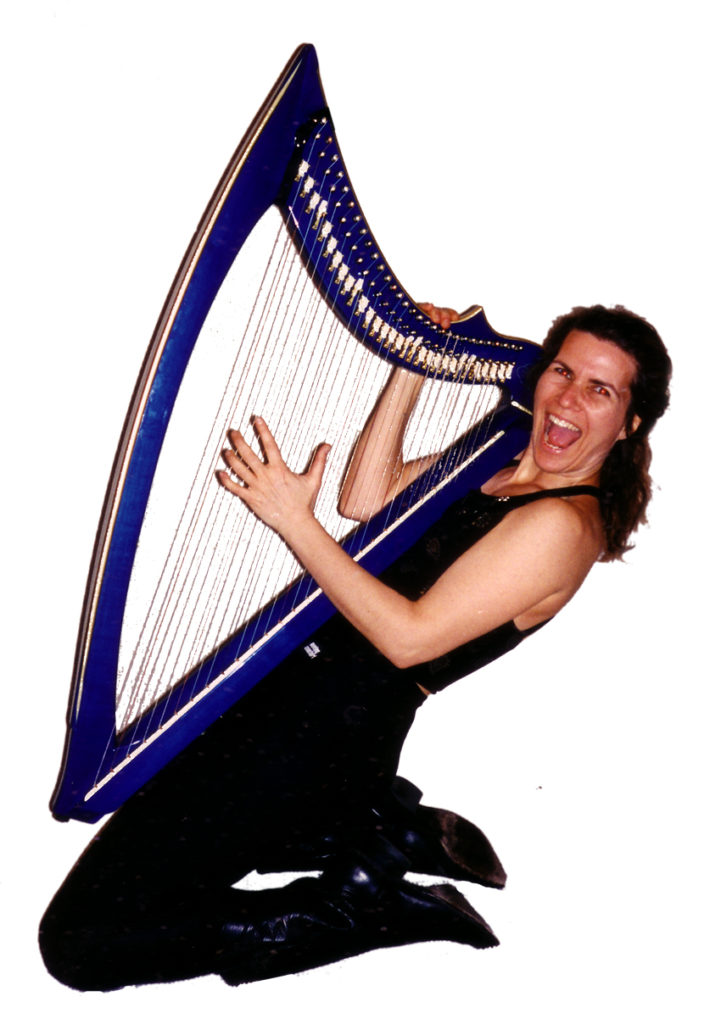
I re-enact my impression of ‘the rock harpist’ pose with CAMAC’s first prototype – weight, about 18 pounds
A Visit to the Harp Factory (Photo Tour)
I got a tour of the CAMAC harp factory to see my signature harp built and had an interview with harp developer and builder Jakez Francois. We saw a harp-form being manufactured and painted and I can’t WAIT to share the interview with you next month.
Here’s a shot from the factory – Jakez is holding the foam harp-form that will become a “DHC” electric harp – and on the wall are hundreds of drawers with harp hardware in them.

I don’t remember what we’re discussing in this photo, but I’m here with the developer, Jakez Francois and the engineer who translated the harp designs into reality … (blah! I lost the piece of paper where I wrote his name!) Jakez is holding the high-grade foam form that is used to create the DHC and we’re standing next to the OLD machine that was used to create these forms.

In this picture we’re watching one of the highly focused factory workers preparing the housing for the electronic pickups that will be attached to the body of the harp.

In this photo you can see the harp shape after it’s been coated with carbon fibre at the bicycle factory (seriously). After that it’s been sanded to prepare it for painting and the wooden attachment that holds the strings and the electronics has been attached.

The Interview
Jakez and I set up for the Interview I’ve been asking for for years – to tell the story of the “DHC” harp and how it went from conception to reality.

Watch the two-part interview below:
The Tedx Talk
Watch the story told ‘from the Harp’ in music and words about my 20-year journey to reinvent the 75-lb classical concert harp so I could wear on stage. It’s about how a bicycle inspired the technology of an instrument — and it’s about the visionary French harp builders who took my dream and made it a reality – for a whole new generation of musicians.