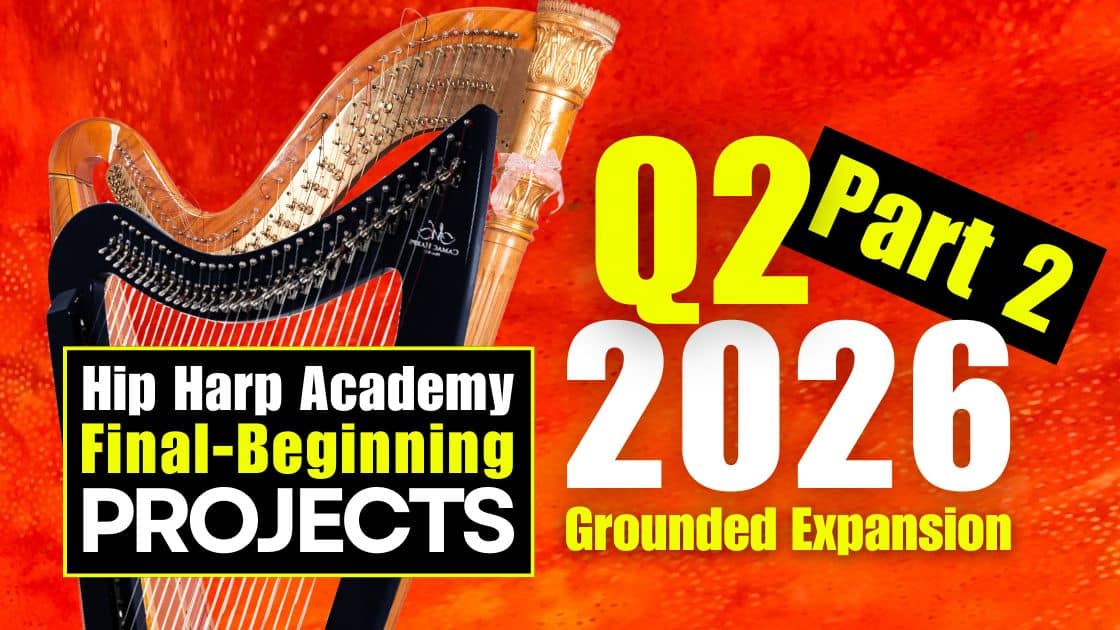
Final-Beginning Pjt 2026 Q2 – Part 2 featuring:
Sophie, Fern, Lynne Reardon, Melinda, Helen, and Teresa
Why “Final-Beginning” Projects?
We call them “Final-Beginning” because if we worried about making them FINAL, we’d never share. Instead, we celebrate each completion as a new beginning that opens doors, builds confidence, and launches the next level of creative expression, always celebrating:
- Creativity: Each project is a commitment to authenticity in creative self-expression — honor the willingness to create and share.
- Individual Expression: Notice how each creative project is completely unique, despite all students taking the same program.
- The Process – Creative Tools in Action: Read each member’s account – in the toggle below in their video – of what tools, skills and experiences in the Academy they used to complete this project. Experience how the PROCESS – not just the presentation – can inspire and inform YOUR creativity.
Ready to unlock YOUR Creative Adventure?
And now – drumroll please! Get ready to be inspired by:
PART TWO of the 2026 Q2 “Grounded Expansion” Final-Beginning Projects
Fern Nelson:
In the last quarter, I found great joy in creating 90-second videos as Fairy Dog Mother to Bhumi, my adorable Labradoodle who lives a couple of blocks down from me. We have actual adventures and make-believe adventures.
Fern's Insights about this Project
Describe your final project so I know exactly what you’re sending me.
This is another episode of Bhumi’s adventures. I managed to get the music video and the photos and AI gather together, but not the transitions which are sort of stark. More work to be done,
Tell us a little bit about who you are, your harp journey, and why originally came to the Academy.
I’m a retired Dermatologist who came to the Academy several year ago after had a couple of years of hands on lessons as an adult. I was looking for freedom of expression and to be “off of the page” as well as on it.
What’s different for you now? What has changed since being in the Academy and anything particular that changed in the last quarter?
In the last quarter I found great joy in creating 90 sec videos as Fairy Dog Mother to Bhumi, my adorable Labradoodle who lives a couple of blocks down from me. We have actual adventures and make believe adventures. My Imovie and AI skills are weak but improving!
What principles from this quarter have you used in your life, your playing, and/or the development of this project – and how did they play a part in your process?
I’m certainly more comfortable playing when there id a video to look at so the emphasis is not on my playing, but that is not necessarily a good thing, I love doing these videos but I also want to be able to love what I play for myself and others in confidence, and I do not have that yet,
Give a short description of what it took for you to be able to play what you did – whether you recorded and shared it or not – both logistically and emotionally.
It was not hard to play, it was a snippet from a week or two back, which reminds me that I should note which snippets I use with which videos. I don’t pay much attention to missed notes or beats because everyone’s attention is on Bhumi and my words, The music is more background music to the visuals and the story.
What freedom and joy within yourself did you connect with in the process?
Much freedom in not caring so much how the music sounded, and lots of joy picking out pictures of Bhumi and making up stories to go with the pics, It is kind of fun creating AI images and blending them with actual photos, a task I never would have undertaken except for this project.
What challenges and blocks to your own freedom of expression did you experience in this class and/or project?
When not doing the Bhumi project I struggle a lot with improv. Here I am in the seat of improv country and still it eludes me. I just listened to Jon Baptiste doing a jazz version of Fur Elise and I have spent days trying to create a tiny improv to go within the piece and nothing sounds like I would like it to. DHC has lots of improv options on her handout of 6 songs in 6 weeks and yet I can not get it together,
What other parts of your life were impacted by what you learned this quarter, and how?
I’vr been impacted by how much love Bhumi has received and how everyone looks forward to her adventures. I’ve learned that background music is fun.
What were your personal “Ahas” and breakthroughs this quarter and did they come thru the chats, a specific class, or the development of a project, a practice, or something else?
DHC challenged me to be able to play four hours of background music by one year from now, after a harpist that I met asked if I could substitute for her at a fancy hotel where she plays 4 hours 3 times a week. I’ve started by trying to play 15 minutes of one phrase or snippet or angel mode or something. The process is coming along.
If your experience of this quarter was a story and had a title, what would the title be?
Tales of Bhumi and Me
Is there anything else you want people to know when they watch your video?
It is the 90 sec improvement of my half baked which had no visuals!
Lynne Reardon:
I continued to gain greater confidence in sharing my creations, which directly affected this project: both in the ability to compose and the ability to share it for others’ enjoyment.
Lynne's Insights about this Project
Describe your final project so I know exactly what you’re sending me.
My harp composition Caramar with a brand new flute accompaniment.
Tell us a little bit about who you are, your harp journey, and why originally came to the Academy.
I’m a Southern Oregon (formerly California) harpist who took private harp lessons for 6 years in the 1980s after playing piano and guitar. I play everything from a Harpsicle to a Lyon & Healy pedal harp, but perform currently on a 38-string custom lever harp. I came to the Academy to become more comfortable with improvising and now can’t imagine being without this empowering community.
What’s different for you now? What has changed since being in the Academy and anything particular that changed in the last quarter?
Since being in the Academy, I’m no longer afraid of improvising and being “imperfect”. I’m less judgmental of other musicians; everyone has gifts to share. This last quarter, I’m learning to enjoy baroque flamenco style more.
What principles from this quarter have you used in your life, your playing, and/or the development of this project – and how did they play a part in your process?
I continued to gain greater confidence in sharing my creations, which directly affected this project: both in the ability to compose and the ability to share it for others’ enjoyment.
Give a short description of what it took for you to be able to play what you did – whether you recorded and shared it or not – both logistically and emotionally.
Logistically: worked under tight timeframe to compose a duet for a wedding client, scheduled a duet rehearsal with flutist and set up with camera on the front porch. Emotionally: it was exciting to hear my flute addition to the piece being sightread by a professional. It warmed my heart.
What freedom and joy within yourself did you connect with in the process?
I became more in touch with my inner muse and the freedom to channel her. It was a great joy to hear my creation performed by others.
What challenges and blocks to your own freedom of expression did you experience in this class and/or project?
Challenge: Navigating my music notation program to formally notate the tune Caramar that I composed and recorded 26 years ago. And imagining what flute notes would complement the tune. The freedom to create a flute part, knowing I could do it even though I don’t play flute.
What other parts of your life were impacted by what you learned this quarter, and how?
Releasing the obsession to do things “perfectly” in order to be “okay” has freed me to accomplish more and express myself not only in performing but in other areas like housework and gardening.
What were your personal “Ahas” and breakthroughs this quarter and did they come thru the chats, a specific class, or the development of a project, a practice, or something else?
It felt hugely gratifying to hear my multi-part composition performed. The whole is greater than the sum of the parts. This breakthrough is part of a project: taking on a wedding gig with a flutist for the first time in my life.
If your experience of this quarter was a story and had a title, what would the title be?
The same name as my composition “Caramar” which I’ve always called “the place where you go to make your dreams come true.”
Is there anything else you want people to know when they watch your video?
During the past month, I’ve been too preoccupied with learning new music for two weddings that I was unable to develop the half-bake I’d submitted. However, I submit this as my final beginning project: two weeks ago I composed a new flute accompaniment to Caramar (a piece I composed and recorded in 2000), so that my duet could perform it as the bride’s processional for a wedding last week. This 3.5-minute video records only the first half of the tune.
Harpists Who Dare
Ready to liberate yourself from the notes on the page?
Melinda Ostrander-Aviles:
I felt freedom and joy to play with good musicians, without written music, and attempt to get to a flow state while trying to block out the classical musician’s “perfectionist wound.”
Melinda's Insights about this Project
Describe your final project so I know exactly what you’re sending me.
Video filmed at flute retreat in Los Angeles. This is an improvisation on alto flute with handpan.
Tell us a little bit about who you are, your harp journey, and why originally came to the Academy.
I originally came to the academy during the pandemic. I was looking for ways to expand on my improv skills on harp and flute.
What’s different for you now? What has changed since being in the Academy and anything particular that changed in the last quarter?
More and more, especially lately, I am gravitating toward improvisation – almost exclusively. Where I was once dependent on written music, I now prefer to just improvise.
What principles from this quarter have you used in your life, your playing, and/or the development of this project – and how did they play a part in your process?
I always find something to take away from every class or Office Hour. Even when I am not actively practicing due to other responsibilities, I think I am absorbing little bits that add to my improv toolbox. And just coming to class, or even listening in the background is sometimes just enough to bring me to another place for a few minutes. It’s like dipping your toes in the water, even if you are not immersing yourself.
Give a short description of what it took for you to be able to play what you did – whether you recorded and shared it or not – both logistically and emotionally.
This project was a series of challenges, When I left to go to Los Angeles, I wasn’t even sure I would be able to play at all, I had been having severe arthritis pain in both thumbs, as well as my knee, Alto flute is very heavy and is support4d by the thumbs. This improv was challenging because I struggled to hear the handpan. It wasn’t amplified at all. This was recorded on an iphone. I don’t yet have a better recording. I converted the iphone video to audio and pulled it into Soundtrap where I duplicated it to increase the volume. That cauaed some hissing, so I decided to try adding ocean sounds to cover it. Then I pulled it into iMovie and added photos and video that I took at Hermosa Beach.
What freedom and joy within yourself did you connect with in the process?
I felt freedom and joy to play with good musicians, without written music, and attempt to get to a flow state while trying to block out the classical musician’s “perfectionist wound.”
Helen Wright:
In the first quarter I focused on a project that I called God‘s water, involving worship, and I did continue that this quarter. I also continued the snippet club. But mostly this quarter I focused on learning how to apply the Rondo form to simple or short tunes. It took me most of the quarter to realize that modal improv and motivic improv come naturally enough to me that I forget about them oddly enough. I have to remind myself to use them, but when I remember they come back pretty well.
Helen's Insights about this Project
Tell us a little bit about who you are, your harp journey, and why originally came to the Academy.
My name is Helen Wright, my husband andI live in New England. Both are marvelous sons are grown and gone. We have dogs and chickens and gardens. I grew up, listening to classical music. I played piano and guitar as a teenager. In my early 20s I got into Scottish music, I played fiddle for a couple of years, and thenI build a Harp from scrap lumber and played it for a couple of years. Then I entered the workforce and didn’t play much except in church.About 10 years ago I started playing Harp again and joined the Academy 2 1/2 years ago.
What’s different for you now? What has changed since being in the Academy and anything particular that changed in the last quarter?
I joined the academy because I wanted to get better at improv. I learned free improv on the piano in my 20s. After a year or two of DHC‘s freebies, I knew I wanted to improv on the Harp as well.
In the last couple years I feel like I’ve made huge progress on that and I’m very satisfied that I have gotten what I came for.
What principles from this quarter have you used in your life, your playing, and/or the development of this project – and how did they play a part in your process?
In the first quarter I focused on a project that I called God‘s water, involving worship, and I did continue that this quarter. I also continued the snippet club. But mostly this quarter I focused on learning how to apply the Rondo form to simple or short tunes. It took me most of the quarter to realize that modal improv and motivic improv come naturally enough to me that I forget about them oddly enough. I have to remind myself to use them, but when I remember they come back pretty well.
Give a short description of what it took for you to be able to play what you did – whether you recorded and shared it or not – both logistically and emotionally.
This took so many takes. I got pretty frustrated with all the mistakes that I made and finally this afternoon I decided I would give it one more try and it was gonna be one take or bust. And that actually was pretty freeing because it lightened me up and helped me relax.
What freedom and joy within yourself did you connect with in the process?
Freedom to let go of mistakes was a pretty important one.
What challenges and blocks to your own freedom of expression did you experience in this class and/or project?
I love this tune, but it is complex, and the added pressure of having the video camera running and a deadline made it harder for me to play. I found that using a Metronome was helpful because it helped me slow down enough to get through the tricky spots.
It also amped up my own stage fright. Then when I turned it off, I relaxed a little bit.
What other parts of your life were impacted by what you learned this quarter, and how?
I think my big Takeaway is stick to simpler tunes!
What were your personal “Ahas” and breakthroughs this quarter and did they come thru the chats, a specific class, or the development of a project, a practice, or something else?
My biggest Aha moment was that I need to remember what my a-ha moments are, especially what My auto pilots and superpowers are, remind myself of what they are post them on my wall and put them to work.
And that goes back to confidently sitting in the middle of what you can already do and valuing what you can already do.
If your experience of this quarter was a story and had a title, what would the title be?
I would rather do modal or motivic or free improv, then go to war with a team that I love but is too complicated for me to apply in a relaxed manner.
So I should either deconstruct the tune and simplify it more, or, shift to something that’s beautiful that isn’t so hard to play.
Is there anything else you want people to know when they watch your video?
Well, I really want to thank DHC for doing the six tunes in six weeks because it gave me even more around those to enjoy.
Teresa:
During snippet time and homework, I came to ask myself consistently, “What is the LEAST I can do and still have this work easily?” and then apply it to this project. With everything out of the way, there was more room to listen and to experiment.
Teresa's Insights about this Project
Describe your final project so I know exactly what you’re sending me.
O Tu Illustrata by Hildegard von Bingen
This is the complete piece with accompaniment
Please start the video at 1:50 and play through the end.
(This video has been set to Public on YouTube)
Tell us a little bit about who you are, your harp journey, and why originally came to the Academy.
On my third year in HHA, I’ve settled into using the principles in HHA to focus on the music I most want to be playing on the harp, and to find ways to share that music, however imperfect a performance may be.
What’s different for you now? What has changed since being in the Academy and anything particular that changed in the last quarter?
I have begun to focus on what I can easily do now, and what is next with a bit of focus and work, to stop worrying about what I can’t do, and simply get on with the work.
What principles from this quarter have you used in your life, your playing, and/or the development of this project – and how did they play a part in your process?
For Grounded Expansion, starting with what I can easily ground myself in, and see where additional small, mostly comfortable, steps outside my comfort zone might take me, and possibly inspire me to reach for next.
Give a short description of what it took for you to be able to play what you did – whether you recorded and shared it or not – both logistically and emotionally.
It’s taken over 2 years for me to get reasonably comfortable with recording myself and listening to what I’m actually playing (rather than what I fantasize I played,) and to work in ever smaller chunks and bits, and trust it will come together if I don’t freak out.
What freedom and joy within yourself did you connect with in the process?
Finally, finally, finally, parts of what I’m recording ARE sounding the way I hear it in my inner listening.
What challenges and blocks to your own freedom of expression did you experience in this class and/or project?
Finding the time and energy and commitment to myself to sit there and do the work.
What other parts of your life were impacted by what you learned this quarter, and how?
Being able to be more present, whatever I’m doing at the moment.
What were your personal “Ahas” and breakthroughs this quarter and did they come thru the chats, a specific class, or the development of a project, a practice, or something else?
During snippet time and homework, I came to ask myself consistently, “What is the LEAST I can do and still have this work easily?” and then apply it to this project. With everything out of the way, there was more room to listen and to experiment.
If your experience of this quarter was a story and had a title, what would the title be?
What is the Least I Can Do Here and Now to Feel Comfortable With What I’m Doning?
Is there anything else you want people to know when they watch your video?
In response to DHC and others in the Academy asking that my Hildegard pieces be able to be shared, I have set this one to Public on YouTube, under my YT name, Terra Bay.
Sophie Mauch:
I am confronted with a block of “just playing” when I want to get more into a specific project, something I am familiar with from other parts of life… often getting around them by finding “a purpose” connected to others – that in fact helps me to get closer to myself. Now, I am looking for what this can be in this case, with the harp, from the inner or outer world.
NOTE: Sophie doesn’t have a video included in her project
Sophie's Insights about this Project
Tell us a little bit about who you are, your harp journey, and why originally came to the Academy.
I have had my harpsicle lever harp for the past two years, a period in my life that has been marked by a number of house moves – my own and of my elderly mother. After playing the clarinet, I needed an instrument that was softer to play, easier to adapt to the surroundings, and also that could accompany me in my temporary nomadic life. From not knowing a thing, we have become friends, but I am still clumsy at “real” playing, while enjoying the sounds…
What’s different for you now? What has changed since being in the Academy and anything particular that changed in the last quarter?
After a couple of try-outs with courses online and in-person, I discovered the Academy, and while being a bit overwhelmed with the amount of possibilities and offers, am loving to follow as much as I can!
What principles from this quarter have you used in your life, your playing, and/or the development of this project – and how did they play a part in your process?
I am now looking to find my ways and my rhythm of practice, and have enjoyed the Baroque Flamenco and the rondo workshops. I have a more successful learning record with languages than with music, and am aware that usually the “connection” moment is where my learning starts – this is also why I am so glad to have met hipharp and DHC!
However, I have not yet fully connected to this “language” and surrounding, but decided to now follow the thread of the Creative Resonance – 7 Strings of Passion, and can’t wait to see where it will take me.
Give a short description of what it took for you to be able to play what you did – whether you recorded and shared it or not – both logistically and emotionally.
I am confronted with a block of “just playing” when I want to get more into a specific project, something I am familiar with from other parts of life… often getting around them by finding “a purpose” connected to others – that in fact helps me to get closer to myself. Now, I am looking for what this can be in this case, with the harp, from the inner or outer world.
What freedom and joy within yourself did you connect with in the process?
Related to this, my freedom is to finally to devote more attention to expressing parts of myself I don’t really know yet! And this brings joy, when I can play along during class/with the recording, or on my own. And it is joy and frustration together to discover the blocks – but so good to discover where they are and address them!
What challenges and blocks to your own freedom of expression did you experience in this class and/or project?
Following the class is also an expression of taking care of myself and my needs, which does extend to other parts of life. Also, when I don’t have the harp with me, I more often sing when I am alone in places I feel secure, which is a wonderful way to connect also.
What other parts of your life were impacted by what you learned this quarter, and how?
I am exchanging with an artist friend about many principles and practices she does, and about what works for her. All of it is present with me as I am finding my new ways of practicing in my new places, making space for both creativity and structure.
What were your personal “Ahas” and breakthroughs this quarter and did they come thru the chats, a specific class, or the development of a project, a practice, or something else?
My main great Aha is probably the discovery of the incredible community around the Academy – even if I haven’t even properly introduced myself to it, it is a world opening up knowing that such a space exists! Planning on becoming more visible and active in it over time…
If your experience of this quarter was a story and had a title, what would the title be?
Related also to other parts of my life, I would give it the title of “Coming home”
Is there anything else you want people to know when they watch your video?
Video next time! but a big thank you to all!
Harpists Who Dare
Ready to liberate yourself from the notes on the page?
PROJECTS & PERFORMANCES:
FOR HARPISTS:
- Join Hip Harp Academy
- Harp Time Live (FREE Weekly Playalong)
- FREE Resources

Join for Freebies, Stories & News
Join to get weekly-ish emails with stories, videos & events like concerts & classes
Yay! You should get my next newsletter within the next 7-10 days. I'm so happy we'll be in touch!
I won't ever share your email address with others - and you can unsubscribe anytime, tho most people say they really enjoy these weeklish emails.