Why “Final-Beginning” Projects?
We call them “Final-Beginning” because if we worried about making them FINAL, we’d never share. Instead, we celebrate each completion as a new beginning that opens doors, builds confidence, and launches the next level of creative expression, always celebrating:
- Creativity: Each project is a commitment to authenticity in creative self-expression — honor the willingness to create and share.
- Individual Expression: Notice how each creative project is completely unique, despite all students taking the same program.
- The Process – Creative Tools in Action: Read each member’s account – in the toggle below in their video – of what tools, skills and experiences in the Academy they used to complete this project. Experience how the PROCESS – not just the presentation – can inspire and inform YOUR creativity.
Ready to unlock YOUR Creative Adventure?
And now – drumroll please! Get ready to be inspired by:
PART ONE of the 2026 Q1 “Creative Resonance” Final-Beginning Projects
Melinda Ostrander Aviles:
I haven’t spent much time here lately, but I have learned and absorbed by watching and listening to the homework people have presented.
Melinda's insights about this project
Describe your final project so I know exactly what you’re sending me.
I created this piece and video based on a challenge using Emily Hopkins’ new Chippo VST plug-in. I used the plug-in with Garage Band. Then I pulled the stem into SoundTrap and improvised the alto flute melody over it.
Tell us a little bit about who you are, your harp journey, and why originally came to the Academy.
I am primarily a flutist who dabbles in harp I originally came here during the pandemic to connect with others and to learn more about improvisation. I stayed for the snippets, lol.
What’s different for you now? What has changed since being in the Academy and anything particular that changed in the last quarter?
Since beginning in the academy over five or six years ago, I have become more interested in experimenting with new techniques and in sharing different aspects of my creativity.
What principles from this quarter have you used in your life, your playing, and/or the development of this project – and how did they play a part in your process?
I haven’t spent much time here lately, but I have learned and absorbed by watching and listening to the homework people have presented.
Give a short description of what it took for you to be able to play what you did – whether you recorded and shared it or not – both logistically and emotionally.
it was challenging to create the images, working with AI to get them where I wanted them. I am also finding it interesting to work with iMovie, as I am not too familiar with it yet.
What freedom and joy within yourself did you connect with in the process?
Creativity
What challenges and blocks to your own freedom of expression did you experience in this class and/or project?
Eagerness to get things right that I hadn’t had much experience with, but freedom and willingness to do it “good enough” and let go of perfectionism.
What other parts of your life were impacted by what you learned this quarter, and how?
I haven’t been able to participate much yet this year as I am busy with school and caregiving.
What were your personal “Ahas” and breakthroughs this quarter and did they come thru the chats, a specific class, or the development of a project, a practice, or something else?
Lots of creative ahas just lurking here and there and watching others presentations.
If your experience of this quarter was a story and had a title, what would the title be?
Not Enougn Time
Is there anything else you want people to know when they watch your video?
Sorry…no harp this time, just flute and electronics
Joyce:
Blocks: Can I really pull this off?
Freedom: It’s connection, not perfection.
Joyce's insights about this project
Describe your final project so I know exactly what you’re sending me.
I have been working on a Christmas Story for the wise men. I have given Sally my PDFs that I am searching for snippets. I working now on trying to figure out what snippets or adaptation of snippets to accompany me while I tell the story. This is my adaptation of the information to use with the Structure is Freedom Playsheet.
Attach your homework in PDF or JPEG format here:
JDouglasRepetoireToolkit_2944.pdf
Describe your written materials – if there’s anything in particular you want to say about it to help people know what they’re looking at, add that here.
I have already submitted to Sally a Google sheet of the snippet index for searching. I have updated the three snippet documents that I have submitted a number of quarters before so that their page numbers coordinate with the google sheet.
I have also given Sally access to:
DHC-2024Q2-GE-Snippets
DHC-2024Q3-PP-Snippets
DHC-2024Q4-SF-Snippets
DHC-2025Q2-GE-Snippets
DHC-2025Q3-PP-Snippets
DHC-2025Q4-SF-Snippets
DHC-2026Q1-CR-Snippets
What principles from this course or from chats did you use to develop, perform, and record this project – and how did they play a part in your process?
I am pulling together what I have learned from all the various courses and live sessions. I am now looking at the modal magic sessions and the Modal Magic Fakebook for assistance for accompaniment for the characters and sections of the story. I am also including songs that the audience will sing with me.
Give a short description of what it took for you to be able to play what you did – both logistically and emotionally.
I really never envisioned doing something like this for pulling things together for story, song, snippets, and sound. I started HHA for Strings of Passion in 2024 and started with my Feeble Old Woman story, but now I am doing something a lot more involved that needs a lot more thought and more moving parts.
What freedoms and blocks within yourself did you connect with (or struggle with) in the process?
Blocks: Can I really pull this off?
Freedom: It’s connection not perfection.
What challenges did you meet while connecting with your own freedom of expression in this project?
This is an ongoing project throughout the quarters this year with the end result of my performance at a luncheon with a Christmas story.
What other parts of your life were impacted by what you learned in this class, and how?
Having more confidence to be present in what I do.
I play the piano for the gospel sing on Wednesdays at the Pioneer Home. It is definitely about connecting with the elders. I also play the piano at the Monthly Luncheons at Chapel. I have seen my improv creep in.
What were your personal “Ahas”?
Being organized helps my confidence in being present. Thinking through what I would enjoy if I were in the audience.
Is there anything else you want people to know when they watch your video?
No video yet. But I as I move forward I will be using the homework submissions for feedback.
I have been working on a Christmas Story for the wise men. I am working on trying to figure out what snippets or adaptation of snippets to accompany me while I tell the story. This is my adaptation of the information to use with the Structure is Freedom Playsheet.
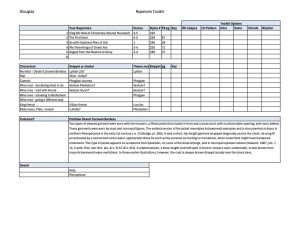
Click image to download PDF.
Jolijne Viergever:
Even though the path isn’t always clear, just start moving, act on the impulse, you might be surprised where it takes you!
Jolijne's insights about this project
My dear friend Joke sent me another challenge which I haven’t been able to fulfill yet, but it took me on an impulse and beyond…..
What principles from this course or from chats did you use to develop, perform, and record this project – and how did they play a part in your process?
I had no musical ideas and just wanted to follow the strings of passion step for step to see where that would take me
Give a short description of what it took for you to be able to play what you did – both logistically and emotionally.
This quarter I really wanted to spend more time on my DHC to get more comfortable with it. I started the quarter well but rehearsal days and performances lowered my energy levels drastically. In stead of beating myself up about it I decided it would be something for next time and to not feel guilty about it.
What freedoms and blocks within yourself did you connect with (or struggle with) in the process?
The piece joke scored out for me isn’t easy. While practicing I fell in love with four bars of the left hand and decided to see where they would take me. I knew Joke would forgive me
What challenges did you meet while connecting with your own freedom of expression in this project?
I performed the four bars as an improvisation piece which was well received but I was looking for an extra to add on. In class we had a simple movement that I really liked but I was struggling to connect both movements to each other.
What other parts of your life were impacted by what you learned in this class, and how?
Even though the path isn’t always clear, just start moving, act on the impulse, you might be surprised where it takes you!
What were your personal “Ahas”?
I realized that improvisation is starting to come naturally to me and that I hardly care anymore if I’m playing a ‘wrong’ note
Cherrie Mooney:
Working on this project taught me to be happy with taking things one step at a time, taking a break, and coming back later, knowing I was getting closer to my goal with each step.
Cherrie's insights about this project
Describe your final project so I know exactly what you’re sending me.
This is a tribute to my mom using iMovie with photos of her life, along with a variety of snippets.
What principles from this course or from chats did you use to develop, perform, and record this project – and how did they play a part in your process?
I started with the Strings of Passion which helped map out the direction of the project. I then developed a list of snippets from class, using different rhythms. After coming up with a number of snippets, I decided to make an iMovie of my mom’s life, searched through many photos, and picked which ones to use. I divided the photos into age categories and matched them with snippets. I used the “throw everything in and then take out what’s not needed“ philosophy.
Give a short description of what it took for you to be able to play what you did – both logistically and emotionally.
I enjoyed playing around with the different snippets and coming up with several to choose from. In contrast, by going through the pictures, a variety of memories and emotions surfaced.
What freedoms and blocks within yourself did you connect with (or struggle with) in the process?
Even though I had used iMovie in the past, it seemed to have changed, or I just couldn’t figure out how to do some things. However, I wasn’t afraid to look up answers.
What challenges did you meet while connecting with your own freedom of expression in this project?
As I was going through the many pictures, I imagined family members having opinions of what pictures I had chosen and not chosen. I decided that since this was my project, I chose the ones that I thought were important and represented her life. I’m still sending family members a link to this video when I’m done.
What other parts of your life were impacted by what you learned in this class, and how?
Working on this project taught me to be happy with taking things one step at a time, taking a break, and coming back later, knowing I was getting closer to my goal with each step.
What were your personal “Ahas”?
Without this class, I wouldn’t have had the idea to attempt this project and would have missed out.
Is there anything else you want people to know when they watch your video?
Looking at my mom’s whole life from my current age, makes me realize how strong she was and how she dealt with adversity.
Harpists Who Dare
Ready to liberate yourself from the notes on the page?
Cherie Maffey:
It was harder playing the melody and more complex ideas while singing & playing, but I’m glad I tried it, as I think it will be easier with more practice.
Cherie's insights about this project
Describe your final project so I know exactly what you’re sending me.
I am singing & playing Pokarekare Ana a Maori love song, written in 1914, and sung in the army camps during WW1. Pokarekare Ana means rippling water, and of lovers separated by water. This song is in public domain, and is well known and loved in New Zealand.
What principles from this course or from chats did you use to develop, perform, and record this project – and how did they play a part in your process?
I’ve learnt how to sing & play the harp and this time I’ve challenged myself by substituting chords, on the 1 and 4 chords to the minor, and using rhythm. I’ve learnt about substitution in class and rhythm so used those ideas for this project.
Give a short description of what it took for you to be able to play what you did – both logistically and emotionally.
It was harder playing the melody and more complex ideas while singing & playing, but I’m glad I tried it, as I think it will be easier with more practice.
What freedoms and blocks within yourself did you connect with (or struggle with) in the process?
It was good to try something that was more difficult and not to worry if it’s not how I want it to be just yet. I’d like to put this into my repertoire/ playlist as it’s so well known that the audience will sing-along.
What challenges did you meet while connecting with your own freedom of expression in this project?
I had to learn the Maori words for this tune, and work out a key that would best suit my voice, and then work out the substitute chords and melody, and rhythm. I’ve only ever heard this played on a guitar so I was so pleased with how beautiful it sounded on the harp.
What other parts of your life were impacted by what you learned in this class, and how?
I had fun getting video footage in Kaikoura, on the coast of New Zealand, and this made my holiday more fun.
What were your personal “Ahas”?
How the substitute chords can make such a difference to the sound of a tune and give more feeling to the music. I want to explore more of these ideas and altering the dominant, which I didn’t do this time but will try it out next time.
Is there anything else you want people to know when they watch your video?
At the end of the video there is footage of a pole called powhenua, which represents ancestors, and guardians of the land. They are found all along the coast since the big 7.8 quake in 2016, which uplifted the sea bed by 5 meters.
Betty Herloski:
I can accept myself and that’s enough. Also the realization that I missed the harp. That it’s important to make time for myself.
Betty's insights about this project
Describe your final project so I know exactly what you’re sending me.
Tenitive step back into playing again using 2 pieces in the Mixolydian mode. Both short, not meant to blend together. One slower, one more upbeat.
What principles from this course or from chats did you use to develop, perform, and record this project – and how did they play a part in your process?
I got back into playing with modes. Specifically the Mixolydian mode. It reminded me of the folksy type songs I love.
Give a short description of what it took for you to be able to play what you did – both logistically and emotionally.
I have been very short on time as late dealing with my own physical limitations and dealing with family, particularly my brother who is dealing with cancer and is in the hospital. It seemed every time I sat down to play I would get a call from the hospital. Or I’d have my own appointment which for some reason always seemed to happen during a harp chat. Emotionally I had to overcome the feelings of being way behind and not playing as I would like
What freedoms and blocks within yourself did you connect with (or struggle with) in the process?
Blocks : as I hadn’t even turned in a half bake I felt unsure whether to try to submit anything. This is more of a finally beginning to let go of fears and limitations project. Freedom: deciding to sit down and play for myself.
What challenges did you meet while connecting with your own freedom of expression in this project?
Deciding what to play. Finding the freedom to play a couple of favorite old time songs of mine Freedom to just play and record without trying to present a perfect presentation. Not hiding behind special video effects or fancy arrangements. Just letting myself enjoy the feel of the strings under my fingers and the comfort of the vibrations against my body. It felt very healing connecting again with my harp.
What other parts of your life were impacted by what you learned in this class, and how?
The idea of not having to be perfect, the idea that I am enough just as I am while striving to build towards more.
What were your personal “Ahas”?
I can accept myself and that’s enough. Also the realization that I missed the harp. That it’s important to make time for myself.
Is there anything else you want people to know when they watch your video?
It’s nothing fancy, just two short pieces that I enjoy. I didn’t try to combine them, I just played what I felt.
Carol Henley:
If you get stuck in your house with bad weather, create!
Carol's insights about this project
Describe your final project so I know exactly what you’re sending me.
A complete version of my Reflections on Snow
What principles from this course or from chats did you use to develop, perform, and record this project – and how did they play a part in your process?
I approached this focusing on the importance of connection, rather than perfection — which made it possible for me to actually compose something.
Give a short description of what it took for you to be able to play what you did – both logistically and emotionally.
I had to let go of the idea I needed to play someone else’s music (with some improvisation) rather than playing my own music. This process (writing music) felt like going one step beyond improvisation.
What freedoms and blocks within yourself did you connect with (or struggle with) in the process?
I kept asking myself, do I know what I am doing?
What challenges did you meet while connecting with your own freedom of expression in this project?
I wrote a simplified lead sheet to remember what I was creating. Then, when I played from my lead sheet, I felt like I lost spontaneity.
What other parts of your life were impacted by what you learned in this class, and how?
In general, just because I haven’t tried doesn’t mean I can’t do it!
What were your personal “Ahas”?
Aha! I actually wrote a piece of music.
Is there anything else you want people to know when they watch your video?
If you get stuck in your house with bad weather, create!
Bonnie Berk:
So many tools learned from this course.
1. Open up space when telling a story or poem with the harp. It’s about the music supporting the story instead of trying to “show off” my playing.
2. Simple can be beautiful.
3. Using repeated chord patterns to ground the listener’s experience and at the same time, use variations to make it less predictable.
4. Incorporate sound effects with the harp.
Bonnie's insights about this project
Describe your final project so I know exactly what you’re sending me.
Putting harp music to a poem I wrote comparing trees to myself. Somewhat broken but nevertheless a beautiful gift of nature. Looking past the imperfections and seeing the beauty!
What principles from this course or from chats did you use to develop, perform, and record this project – and how did they play a part in your process?
So many tools learned from this course.
1. Open up space when telling a story or poem with the harp. It’s about the music supporting the story instead of trying to “show off” my playing.
2. Simple can be beautiful.
3. Using repeated chord patterns to ground the listener’s experience and at the same time, use variations to make it less predictable.
4. Incorporate sound effects with the harp.
Give a short description of what it took for you to be able to play what you did – both logistically and emotionally.
I needed to find sounds on the harp that helped me to express what I wanted to say.
i also needed to get away from myself and focus on providing music that enhanced the message rather than trying to use impressive harp techniques.
What freedoms and blocks within yourself did you connect with (or struggle with) in the process?
I connected with my need to be perfect! I love that we are allowed to be perfectly imperfect and still use the harp for self expression.
What challenges did you meet while connecting with your own freedom of expression in this project?
The challenge of moving away from the ego and playing from the heart.
What other parts of your life were impacted by what you learned in this class, and how?
i notice that some of my behaviors are trying to stoke my ego, so I am trying to set my intentions from my heart and in the process, I am beginning to make better decisions listening to my heart rather than my ego. And in the process, not “beating myself up” when notice, but rather be more compassionate to myself and move on. I also am aware that the more compassionate i am to myself, the less judgemental I am to both my self and others.
What were your personal “Ahas”?
see above
Harpists Who Dare
Ready to liberate yourself from the notes on the page?
PROJECTS & PERFORMANCES:
FOR HARPISTS:
- Join Hip Harp Academy
- Harp Time Live (FREE Weekly Playalong)
- FREE Resources

Join for Freebies, Stories & News
Join to get weekly-ish emails with stories, videos & events like concerts & classes
Yay! You should get my next newsletter within the next 7-10 days. I'm so happy we'll be in touch!
I won't ever share your email address with others - and you can unsubscribe anytime, tho most people say they really enjoy these weeklish emails.